

| WHB Home : All Blogs : Recent Blogs : Calvin's Institutes : Book I - 10/7/2008 | |
 October 7, 2008 1:50pm v.11
Rating:
October 7, 2008 1:50pm v.11
Rating:

 Status: Hidden
| Leave a comment: no comments ~ | Printable Version |
| PREV | 378 of 459 | NEXT |
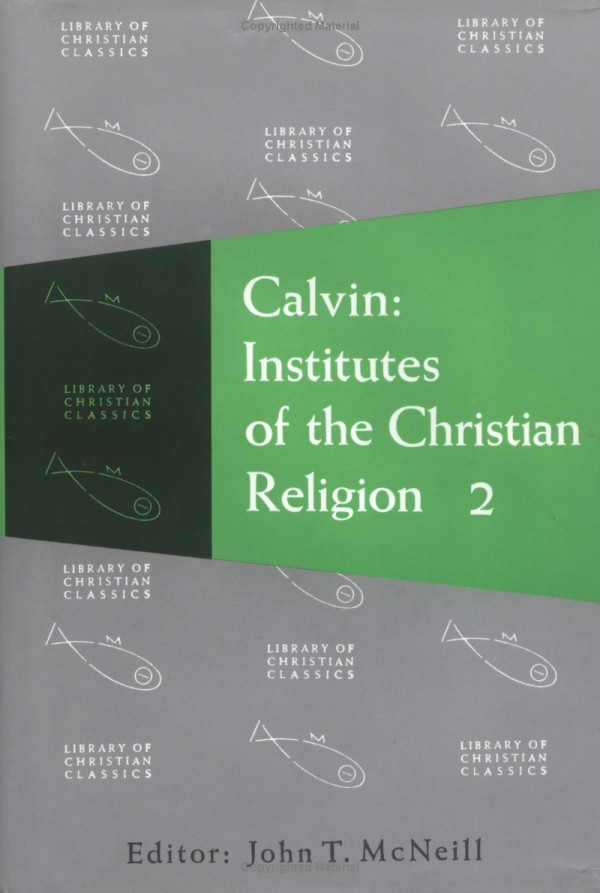 I highly recommend Ford Lewis Battle's translation of John Calvin's Institutes of the Christian Religion. Battle's rich vocabulary and eloquent sentences keeps the pages turning through this heavy 1800 page, four book masterpiece. See my introduction to Calvin's Institutes. I highly recommend Ford Lewis Battle's translation of John Calvin's Institutes of the Christian Religion. Battle's rich vocabulary and eloquent sentences keeps the pages turning through this heavy 1800 page, four book masterpiece. See my introduction to Calvin's Institutes.I thoroughly enjoyed reading "Book I: Of The Knowledge of God the Creator", and have learned a-thing-er-two about John Calvin. Almost every page of Calvin's theology is derived from Augustine's writings. In someways, the Institutes is a defense of Augustine's theology, and Calvin provides very little unique or original research. Even "Calvinism" (predestination, election,etc.) is basically a summary of Augustine's writings against the Pelagians. The Institutes is full of dramatic characters and passionate language. Calvin has contempt for opponents of his theology and gives them colorful labels like "blasphemous sinners." The Epicureans, Sophists and Pelagians are repeated examples of heretic teachings, and are scathingly anathematized. Calvin's chief nemesis is Michael Servetus, who is introduced half-way-through Book I, and is considered the principle devil responsibly for propagating every heretical lie imaginable for the sole purpose of thwarting Calvin's true and good theology. Ockham and Chrysostom also frequent cited as heretical teachers, but never receive the curses that Servetus receives. Plato, Cicero and Natural Philosophers are Calvin's admired nemeses. Calvin is steeped in Greek and Roman thought, and often cites these teachers as worldly wisdom that is close to the truth, but blinded because they do not know God. None of them compare to the "Holy Man Augustine", not even Origen, or any other Church father. In Book I, Calvin analyzes what a man knows about God from his nature and from observing Creation, and explains why it is impossible for man to know God in either means. Calvin defends scripture and explains why salvation can only be obtained through God's word by unilateral revelation from God. The end of Book I introduces the arguments surrounding election, predestination and free will as well. The Institutes lists all the arguments for-and-against Calvin's positions and then answers them inline, and each section builds on the previous sections, making the Institutes a valuable reference and very readable book. Despite Calvin's intense statements and quick anathema's, his theology is very hard to disprove. The arguments are very clear and educational, and I wish I had read this title years ago! The church as a whole would be much better off today, if we all read this masterpiece.
Last Update: October 7, 2008 5:29pm |
| PREV | 378 of 459 | NEXT |
| Leave a comment: no comments | [Hide Comments] | Printable Version |
| BACK TO COLUMNS | ©2026 http://www.houtz.tv by Wyatt Houtz | LOGIN |